Defense against kamikaze drones during vehicle movement



Guides / Full document
Full HTML processing for the uploaded document: all guide pages are displayed as live text alongside the original illustrations, without embedding a PDF or PDF viewer.
Quick navigation

Armed Forces of Ukraine
11th Army Corps
Unmanned Systems Operations Department

This instruction will help you save lives and vehicles in an encounter with the enemy’s FPV kamikaze drones. Read it carefully from beginning to
storm and act accordingly.
The guide is divided into sections that offer action algorithms for the preparation stage before departure, in various possible scenarios
during movement along the route, and after return.
75 closing remarks
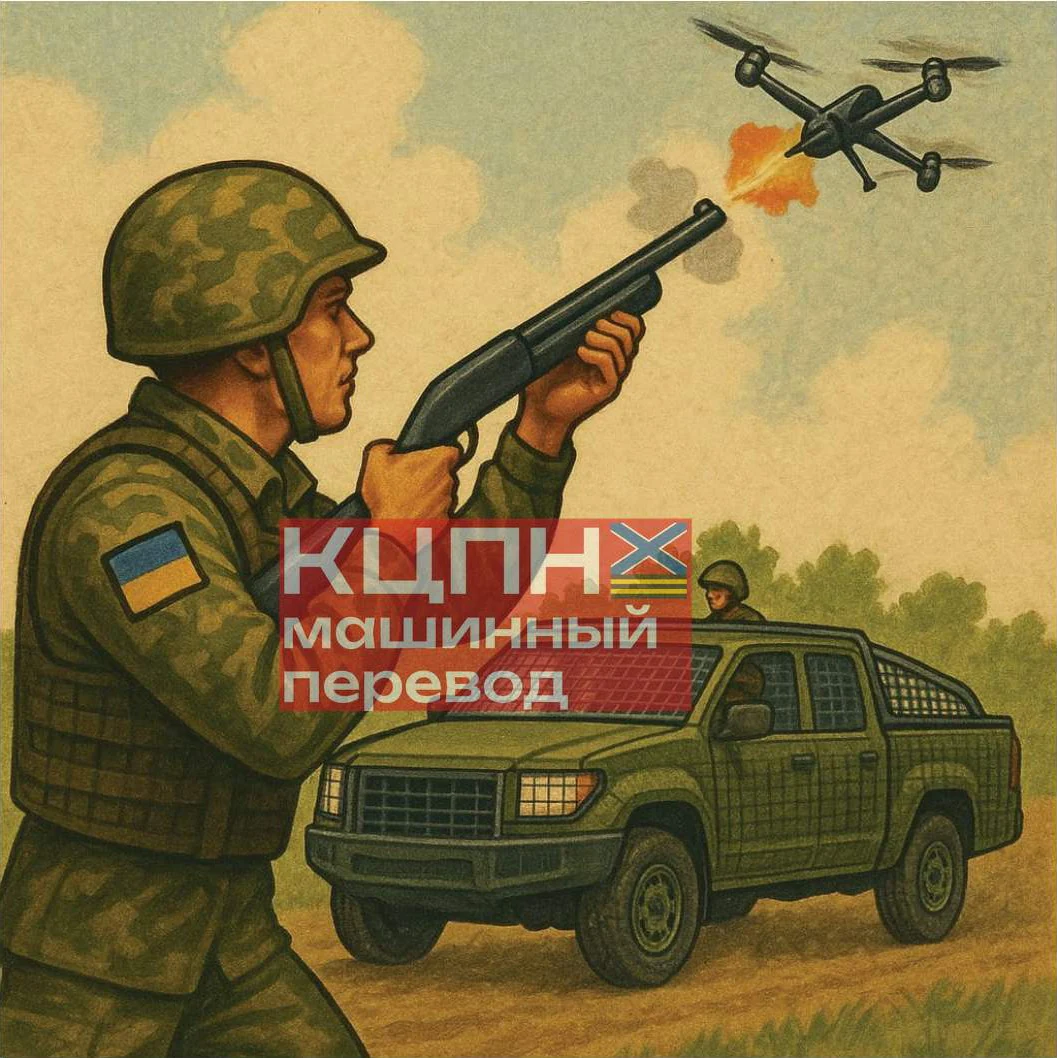
The following actions are carried out by the vehicle commander together with the driver.
What is this for?
A thorough study of the route makes it possible to identify dangerous segments in advance, determine possible shelters, and properly plan the order
Actions while moving and in case threats or unusual developments are detected.
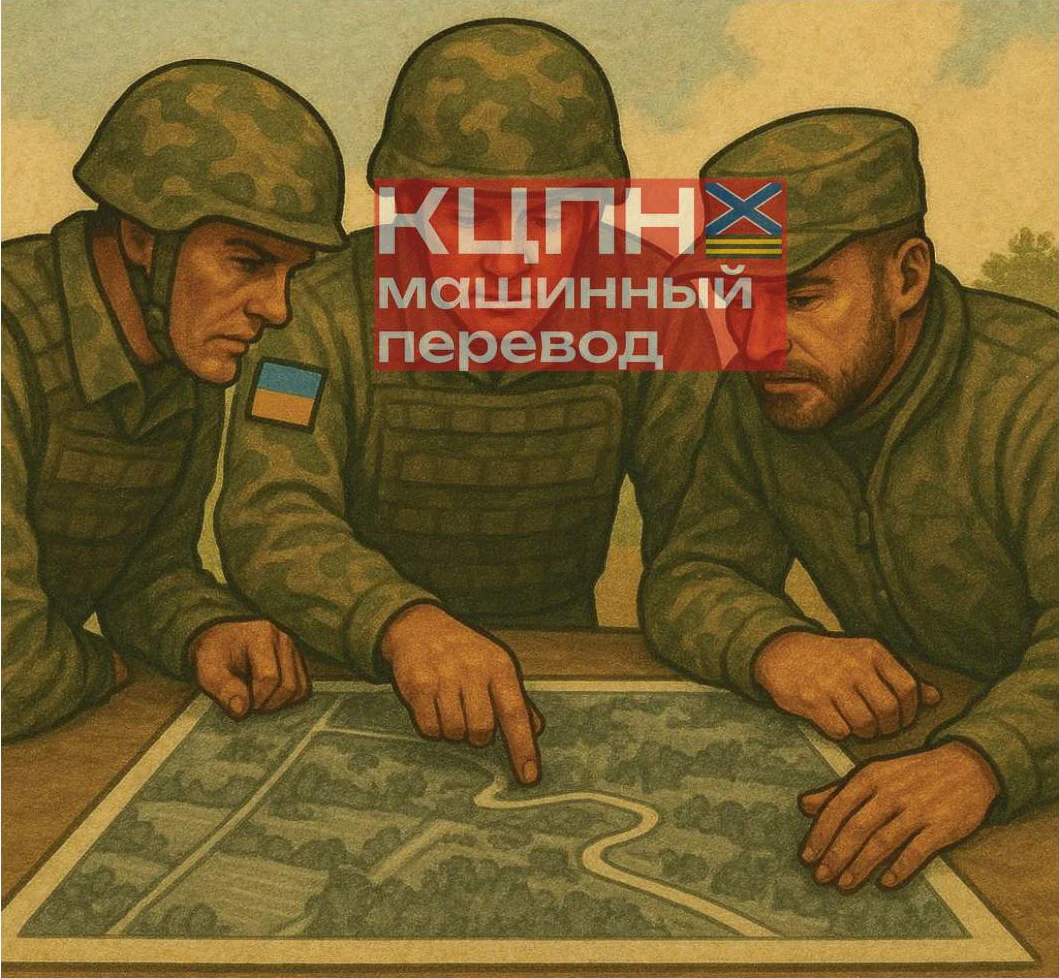
Route planning is the key to a successful mission.
What to do?
They check updated maps and satellite images of the planned route area, for example Delta, Kropyva, and Google Maps, to understand:
The existing road network.
Bottlenecks and movement restrictions: bridges, dams, rivers, swamps, etc.
Natural and man-made terrain features: obstacles, shelters, and landmarks.
Clarify the movement conditions in this area:
With the commander assigning the travel mission.
With intelligence personnel, including UAV observation results and intercepts.
With planning personnel, based on Kropyva and Delta map data.
With intelligence/EW and air defense personnel: areas covered against enemy drones and areas where there is activity
FPV.
With engineering personnel: mined sections and sections where anti-drone tunnels were installed.
With neighboring or friendly forces that have already passed through the area.
What should you pay attention to?
Places where vehicles were previously hit by FPV drones or artillery.
Sections with direct line of sight from enemy positions.
High and open sections: hills, ridges, and wide fields.
What is this for?
Route planning, preparing alternative movement options, and sharing them with all crew members make it possible to prepare for most possible scenarios
and increase the confidence of all trip participants.
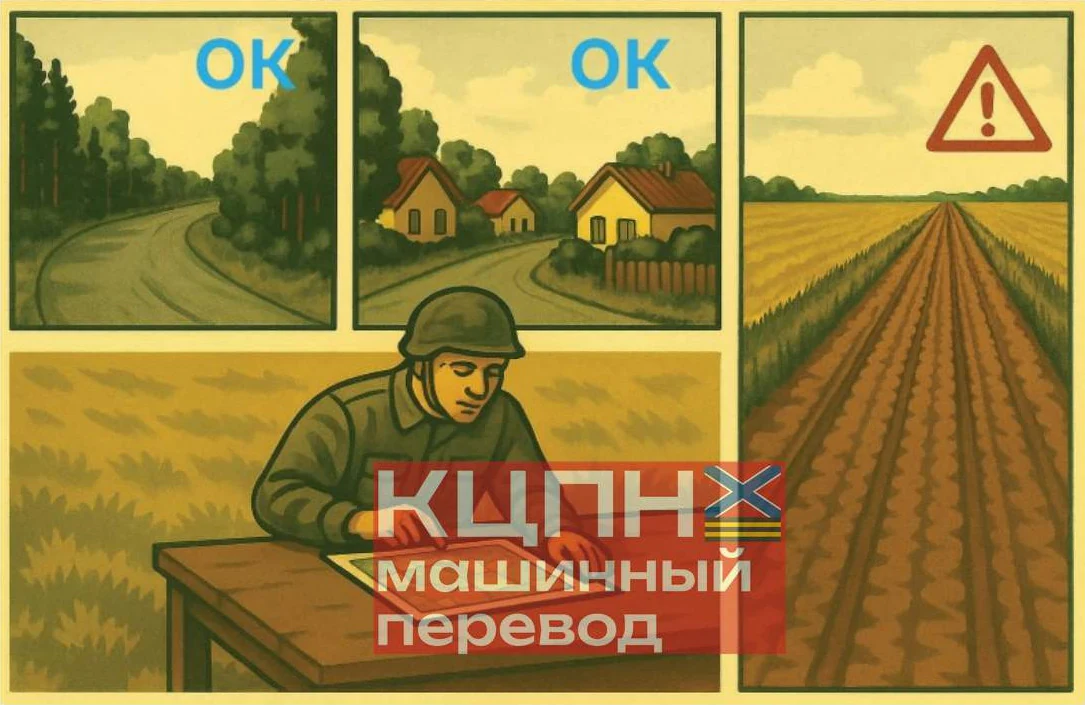
Plan the route so there is somewhere to hide in case of an FPV attack.
What to do?
Choose a route while avoiding, as much as possible, open sections:
Along groves, tree lines, embankments, and ravines.
On roads with dense vegetation on both sides.
On roads near buildings, railway embankments, and bridges.
Identify backup route options, if any:
Field roads.
Detours around dangerous sections.
Evacuation routes for the crew in case the vehicle is destroyed or breaks down.
✓
Important! Avoid open stretches. Ensure temporary cover: forest, buildings, anti-drone tunnels.
What needs to be done?
Study the route and bypass options carefully.
Assess the risk level in each segment.
Share the assessment results with all team members.
What is this for?
To understand where to move with maximum caution and/or maximum speed.
Narrow roads—especially dangerous; places where attacks have already occurred, open areas, high embankments, high-voltage lines,
That cannot be bypassed.
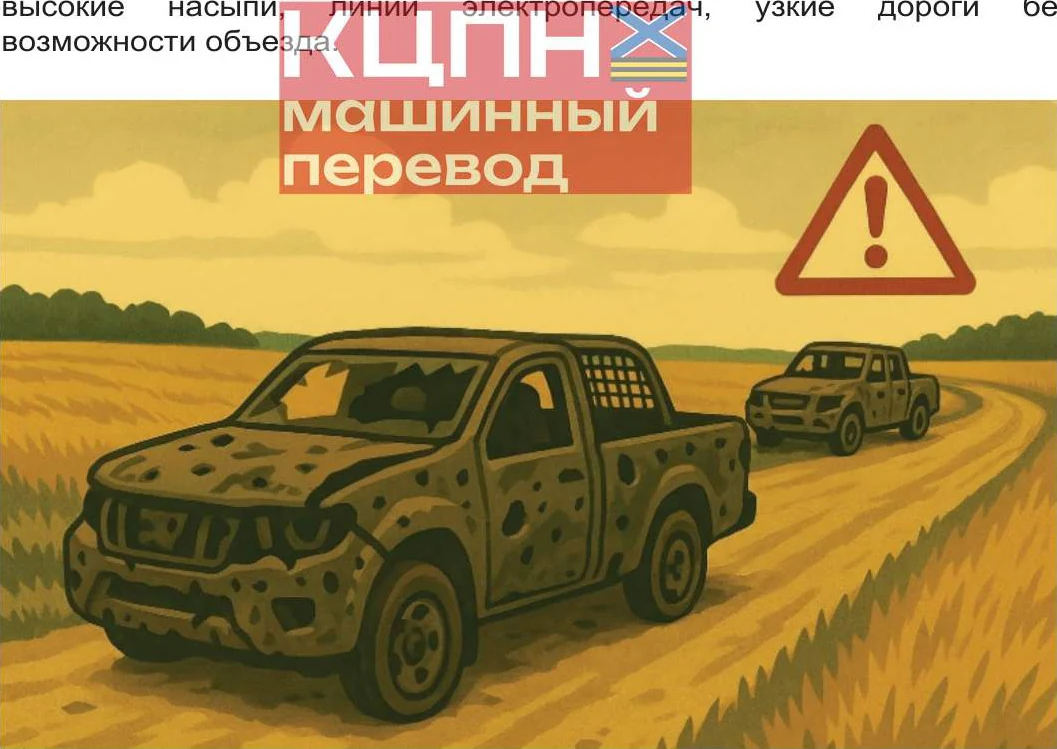
Avoid movement in places where kamikaze drones have already carried out successful strikes.
Direct line of sight and places where enemy observation may be possible - open fields, hills, are dangerous.
- Relatively safe: dense groves, depressions in the terrain, and places outside direct line of sight.
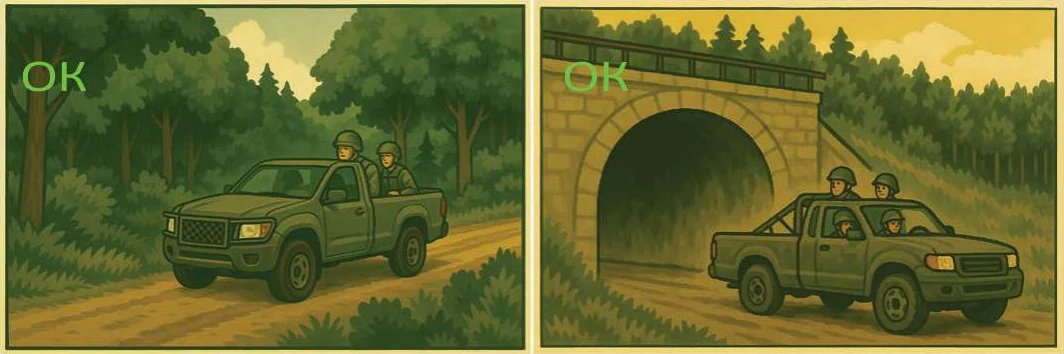
Do this in a protected stretch—trees along the road give a chance to hide from a drone. If you need to stop.
They protect against an attack from the side and from above—protected are tunnels, passages under bridges, and “anti-drone” tunnels..
-In the sample map there is not a single completely safe section on the Kholubyn-Ivanivka route:
There are dangerous sections, and there are dangerous sections that still offer a chance
Avoid a likely drone strike.
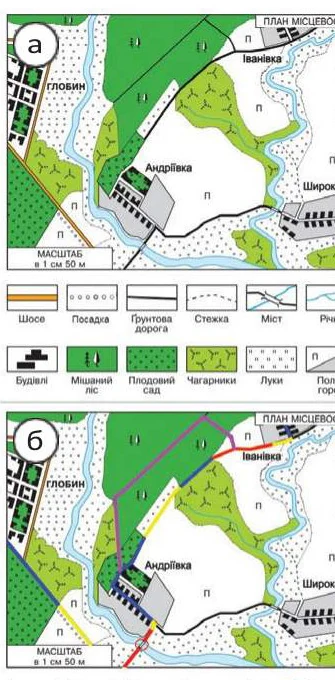
In yellow are dangerous sections that give a chance to avoid an attack:
The road between Khlobyn and Andriivka is covered on one side by a tree line; on the road between
From Andriivka to Ivanivka it is possible to turn into meadow fields and hide in a nearby forest;
On the open section near Ivanivka there is cover from buildings.
In red are especially dangerous sections: approaching open fields
That cannot be bypassed and where drones are likely - and crossing a bridge over the river is a “bottleneck”
The enemy will scout.
The purple dashed line marks a backup route through an orchard and mixed forest.
What is this for?
Time and weather are very important factors affecting the effectiveness of enemy drones. Therefore, all factors must be assessed and carefully planned
the time window for movement.
What to do?
-Study the weather forecast well for the next 24 hours or for several days
Set a time when:
Weather is likely to worsen: wind above 30 km/h, precipitation
There is an option for more concealed movement: twilight, cloud cover.
Especially toward the enemy—ideal: bad weather. Remember—rain, snow, strong wind, when the enemy’s capabilities are limited or impossible.
That rain, snow, and severe weather may also affect your vehicle's movement.
Advantage: morning or evening twilight, wind toward the enemy.
Avoid movement in open stretches on a clear day.
Learn and account for the enemy drone activity schedule: the enemy may operate at fixed times, for example at dusk.
✓Important! In the front-line area, the best route is the one where the enemy is not waiting for you. The best time to move
is the time when the drone cannot take off.
What is this for?
GPS may not work in the frontline area due to jamming or interference. There is nothing worse than wandering randomly and confused in unfamiliar terrain
Near the line of contact.
What needs to be done?
In advance, download satellite images/maps to the phone in good resolution: .Delta Mobile, Google Maps, Google Earth
Mark the start and end of each segment using prominent objects: intersections, power lines, isolated buildings, tree lines, vehicles
Damaged or destroyed.
For key points such as turns and exits, set visual landmarks so you do not get confused. Distance can also be used: “from the station
In Ivanivka, turn right after 300 meters.
A combination of markers works well: “After the bus stop in Ivanivka, turn left off the road onto a dirt track; near the turn there is a building
Anomaly on the right side of the road”.
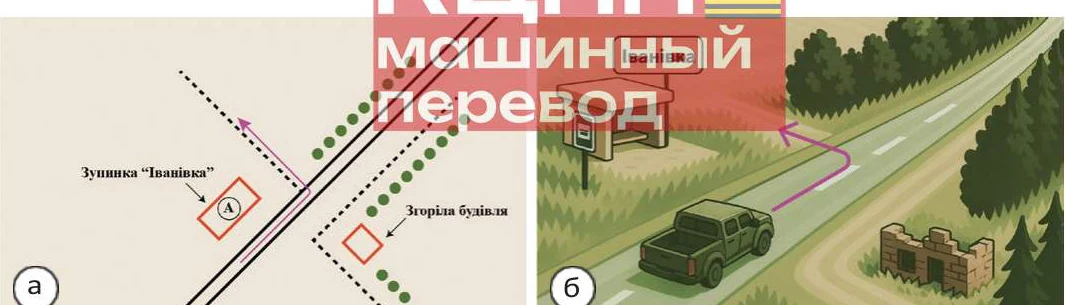
To avoid getting lost, prepare landmark diagrams for key movement sections.
Choose landmarks that stand out in the terrain and are hard to destroy: not a bush, not a tree or single pole, and not a road sign.
✓
Return to the last familiar landmark—important! If you got lost.
What is this for?
Knowing the radio frequencies used by enemy UAVs will help you use EW correctly. Frequencies are measured in hertz, for example 900- mega
hertz or 2.4- gigahertz.
EW is effective only when it disrupts the exact frequencies used by the drone attacking you.
What to do?
Learn the main radio frequencies used by enemy UAVs in your area.
To identify enemy FPV drone frequencies, prepare, tune, test, and use frequency scanners such as TinySA and “Tsukorok”. Some models
Can also identify drone types and even warn of their approach.
If you do not understand radio frequencies and the operation of scanners/EW means, ask unit specialists for an additional briefing with practical training.
Before moving along the route, check - or ask specialists to check - that your EW measures are working. This can be done using the same frequency scanner.
Use the “Dziga” drone detector, which can intercept video from the cameras of a large portion of enemy UAVs at distances of up to 3 km from the detector
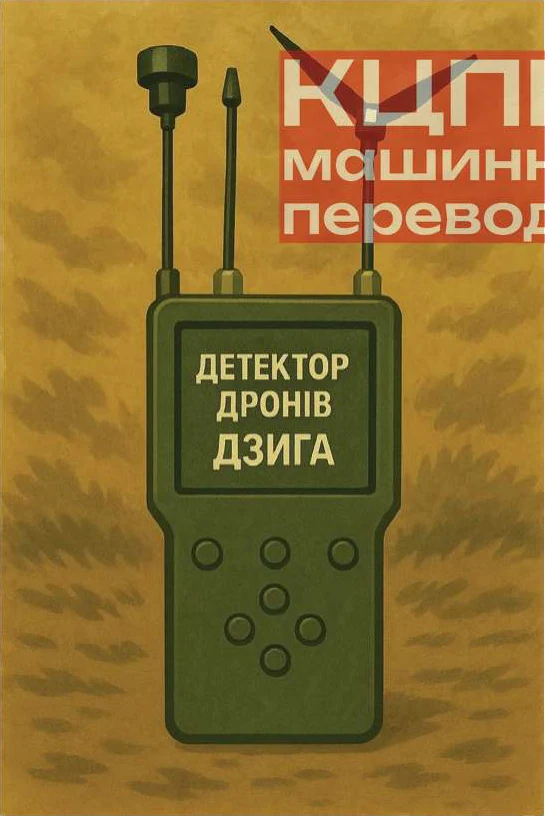

Review of the “Dziga” drone detector — video.
✓ Leave it to those who know- important! Electronic warfare saves lives, use it. If you do not know how,
Show you.
What is this for?
The lives of the crew depend directly on the technical condition of the vehicles. Movement along the route must be predictable and planned, without incidents or unplanned stops
Expected.
What to do?
Before every departure, always perform an inspection check, even if the vehicle previously operated without complaints.
Check engine condition and operation.
Check fuel supply: a full tank before departure is mandatory.
Check oil levels in the engine and gearbox, coolant and brake fluid, and the integrity of the oil pan, radiators, hoses, and the like.
Check battery charge and alternator/generator condition.
Measure tire pressure; check technical condition, suitability for the operating season, and availability of a spare wheel/wheels.
Check the condition of the vehicle’s main components and assemblies.
Check availability of a personal spare parts and tool kit, digging tools, fire extinguishers, a first aid kit, rope/tow straps preferably not orange and without hooks
Metal, jack, wheel wrench, compressor/tire pump, EW equipment serviceability: mounting, charging, and activation, as well as secured camouflage means
and ready for use.
This is important in case it becomes necessary to write explanations, remove equipment from the inventory, or handle other paperwork matters.
Check the availability and readiness of:
Documents accompanying the transported cargo.
Travel/route form with signatures and markings of the responsible personnel from the technical section, the medic, and the commander.
Entries in the logs of vehicle departures from the parking area.
Record that the driver and vehicle commander were briefed, including the movement route, reporting procedure, and cooperation during movement.
Everything being carried must be securely fixed so it does not injure people during sharp maneuvers.
Check that radios, phones, backup batteries, navigation aids, electronic intelligence and EW equipment are charged, if available.
Check emergency exit routes from the vehicle: operation of doors, windows, hatches, handles, and locks.
Make sure nothing will interfere with the rapid boarding/disembarking of people and loading/unloading.
Equip the passenger compartment with a working fire extinguisher and a tool for quickly breaking glass, for example a Swedish wrench.
✓
Important! Preparation does not waste time. It gives you time at the worst moment.
What is this for?
This increases the personal safety of everyone in the vehicle and protects critical vehicle components and assemblies from FPV strikes
or from shrapnel.
What to do?
The best protection for vehicles against aerial attack means is covering the vehicle with additional elements to improve survivability: nets,
Metal frames and protection plates.
The method of additional protection and covering should be chosen according to the type of vehicle and the tasks. Remember: installing additional protection should not impair
maneuverability, make personnel evacuation harder, or interfere with maintenance.
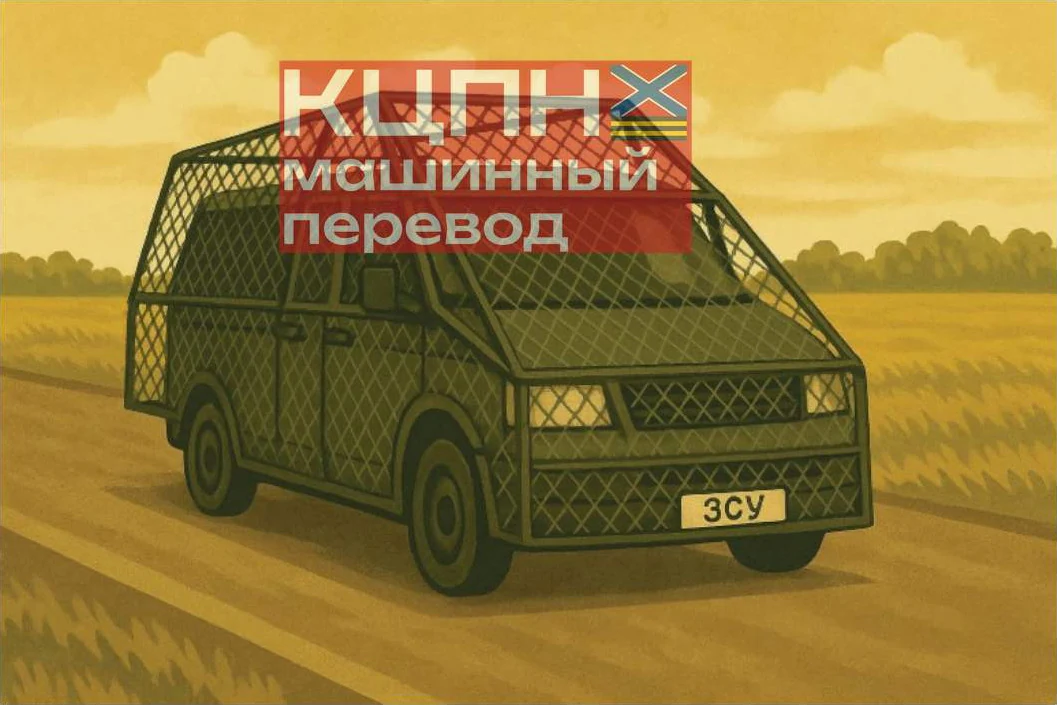
A well-protected vehicle is protected from all sides.
Certified and coded survivability-enhancement elements produced industrially should be preferred. If making them yourself, accumulated experience in use should be taken into account
in similar protection on similar vehicles.
When installing protection, make sure to protect the vehicle’s critical parts in particular:
- Cover windows with metal mesh, reinforce with a sheet/film, or cover with plastic or wooden shields.
- Also cover the battery with protection plates, a metal shield, or dense rubber.
- Cover the fuel tank with non-flammable material.
In any case, a body armor vest is worn before departure: properly fitted, not too high and not too low, covers chest and abdomen; side plates tightly closed; reasonable weight
During evacuation you will need to run.
A helmet protecting the head from blast, fragments, and shrapnel: must fit snugly; straps tightened under the chin; plastic helmets or
“Replica” light ones are prohibited.
Protective goggles to shield the eyes from dust, fragments, and wind: must fit well and not interfere with vision.
During the day it is preferable to use dark lenses, and at night clear lenses.
Gloves, knee pads, and elbow pads, if possible: useful for evacuation, crawling, and crossing obstacles.
Personal weapon: on safe; the vehicle commander personally checks everyone before departure. No round in the chamber unless the vehicle commander decided otherwise.
During movement, hold your weapon so it does not injure anyone inside.
An individual first aid kit for each person: not in a backpack but on the vest or in a pocket.
Permitted contents of a personal first aid kit:
A tourniquet to stop life-threatening bleeding.
Hemostatic bandage.
Israeli bandage or equivalent.
Scissors for quick cutting of clothes.
Marker for noting the time the tourniquet was applied.
Nitrile gloves for protection while providing care.
On each person’s vest/helmet there should also be a marking or tag with blood type, Rh factor, name, and radio call sign.
A general first aid kit is kept separately in the vehicle, with the driver or inside the compartment/storage box. It should include:
Additional tourniquets.
Bandages.
Thermal blankets.
Painkillers.
✓
Important! To minimize risk, be prepared for a possible strike even before departure.
What is this for?
Communications are a vital component of movement in a combat area. Without communications with command or other vehicles, the crew becomes “deaf and mute” and cannot receive
alerts, coordinate actions, or request help.
What to do?
Assign each team/vehicle/person their own call sign. For example:
“Titan-”1- vehicle commander.
“Eye-”1- observer.
“Shadow-”1- intelligence/EW operator, if present.
and so on.
If moving in a convoy of several vehicles, set one general circular call sign so there is no need to list each call sign separately on the radio.
1.. Select and check radios
will provide communications—mobile or vehicle-mounted—when planning the route, check through the communications unit whether the deployed network covers the required area, and what type of device
Reliable along the entire route.
A handheld radio allows staying in contact after evacuating the vehicle. A mounted radio is more powerful and provides greater network range.
If a vehicle-mounted device is installed or an external antenna is connected to a mobile device, check the antenna’s integrity and the reliability of the cable from the antenna to the device.
Make sure you have charged spare batteries for the handheld radio.

Guidelines for operating radio sets of the Armed Forces of Ukraine.
2.. Set up the radios
With the help of communications specialists, turn on the device and set work channels, for example:
Channel 1 — the main communication channel of the command/observation post on duty and the teams; messages are passed through it, for example a return order.
Channel 2 — backup channel, if the enemy jams Channel 1 frequency.
Channel 3 — a “point-to-point” channel for direct communication between teams if contact with the duty post is lost.
Make sure the radio is in scan mode. When scanning is enabled, you can hear a call on any programmed channel, but to reply you must switch to the channel
Where you were called.
Conduct a comms check and receive a response. Make sure every crew member knows the procedure for loss of communication.
For example:
Channel 1: if there is no response, switch to Channel 2.
If channel 2 does not respond- switch to channel 3.
When calling on the radio, repeat the recipient’s call sign twice, then state your own call sign, and only then give the message itself.
✓
Important! Ask your points of contact to help configure the device with scan mode.
3.. Set agreed signals and names
All communication participants must know and use agreed signals for passing information over the air. Examples:
101- “Comms check”.
105, 104, 103 five- comms “three”, “four”, “.”
108 what is the status- “?”
109 all good- “.”
18 vehicle attacked by a drone- “.”
26 the vehicle is moving- “.”
222 the vehicle is not moving- “.”
Example casualty codes: 330 lightly wounded, 350 moderately wounded, 370 severely wounded.
490, 440 immediate medical evacuation required- “evacuation required”, “.”
Circular radio call sign—Delta.
- Tyson “FPV kamikaze”.
- Roadblock “drop drone”.
- Scooter “reconnaissance drone”.
- Yeralsh “forced stop”.
- Tipa “minute”.
- Malvina “meter”.
- El Vasyl “increase speed”.
Reduce speed - to floor “.”
and so on.
-A request for a comms check, in such a case, might sound like: “Tuman 3, Tuman-3, this is Shadow-110, 1”. An order for all vehicles to increase speed can
-Sound like: “Delta, Delta, this is Tuman! ”1. El Vasyl
It is very important to prevent possible similarity between signals when heard, for example between 150 and 160 or between “Bars” and “Mars”.
Avoid using common signals; define short, clear codes that are unique to the team.
Also assign agreed names to settlements and key objects/landmarks along the route. For example:
- Ivanivka “Poltava”.
- Andriivka “Brovary”.
- A noticeable turn from the road onto a field track “pants”.
Tree line 1 - “Throat”.
Tree line 2 - “Boyan”.
- Bus stop “bench”.
Based on the examples, try to understand the following radio exchanges:
”101, “Bars, Bars, this is Tuman!
”104, “Tuman, Tuman, this is Bars, roger.
Example radio report: “Bars, Tyson identified after the checkpoint, moving toward Brovary, roger.”
”108.“Tuman, plus, roger.
26.109, “Bars.”5, , now light drizzle, and planning along Hron toward Poltava. Copy
“Plus-plus, Tuman.”
“Plus end of comms-plus, Bars, ”.
-If there is no time, you can simply number key points and landmarks along the route, for example from 1 to 30, and mark them on a photo
satellite and send a screenshot to all movement participants.
✓
This will save time on the call and conceal information about yourselves—important! Use agreed signals.
4, . Cellular and LTE internet comms backup.
When planning the route, check through the communications unit:
Which mobile operator's network is best suited for reliable communications through a vehicle-mounted LTE modem?
Which SIM cards should be taken as backup?
Visually check the integrity and secure mounting of antennas and antenna cables for the LTE modem.
-Turn on the LTE modem while moving and connect your mobile device to it: phone, tablet, or laptop.

Link to one of the versions of an LTE modem for a vehicle.
Set agreed signals, for example knocks, for communication between the cargo bed and the driver's compartment.
Do not forget to bring a charged backup battery and a cable to power the radio/phone/tablet.
Before departure, conduct an audible briefing on communications organization for everyone in the vehicle.
What is this for?
A clear division of roles and understanding of areas of responsibility and procedures during movement and emergencies make it possible to be prepared for different scenarios and act
in coordination when necessary.
What to do?
Before departure, assign the following roles to the team members and passengers.
The vehicle commander is appointed by order or verbally before departure.
In any case, he must understand the nature of movement under the threat of enemy drones. Sometimes the right decision may be instinctive, but instinct
Acquired only through personal experience.
The vehicle commander makes decisions and gives orders, including regarding:
Start of movement.
Stop.
Route change.
Turning EW equipment on/off.
Choosing cover.
Evacuation from the vehicle.
Evacuation direction.
Opening fire from cover.
Actions in case of continuing movement without the vehicle.
Focuses on driving and maintaining vehicle operability. As needed, observes the sector assigned to him. Sectors are set “by clock”: straight ahead
- 12, rear - 6, right - 3, left - 9, and so on
All crew members and passengers, regardless of other roles, must carefully observe the surroundings. This means:
Listen to sounds outside the vehicle in order to hear a drone in time.
Watch the sky to detect a drone in time.
Watch the surface: road edges, ground, and flat roofs, to detect an FPV ambush in time.
If possible, one crew member should focus solely on observation. He conducts 360-degree observation or watches the sector
the most important.
The observer must:
Sit comfortably for observation, with a window or opening open if the situation allows.
- If possible, keep binoculars or a thermal device; especially effective in winter.
Listen, scan, and assess the surroundings: unusual movement, drone sounds.
Report immediately, in a clear voice and without panic: “FPV at three o’clock high!”, “Drone at eleven o’clock!”, “Noise ahead!”
✓
Important! Everyone in the vehicle must watch and listen. Less talking, more attention.
Responsible for operating available EW means: charging, frequency selection, power on and off.
Monitors alerts from radio scanners and drone detectors.
Observes the sector assigned to him.
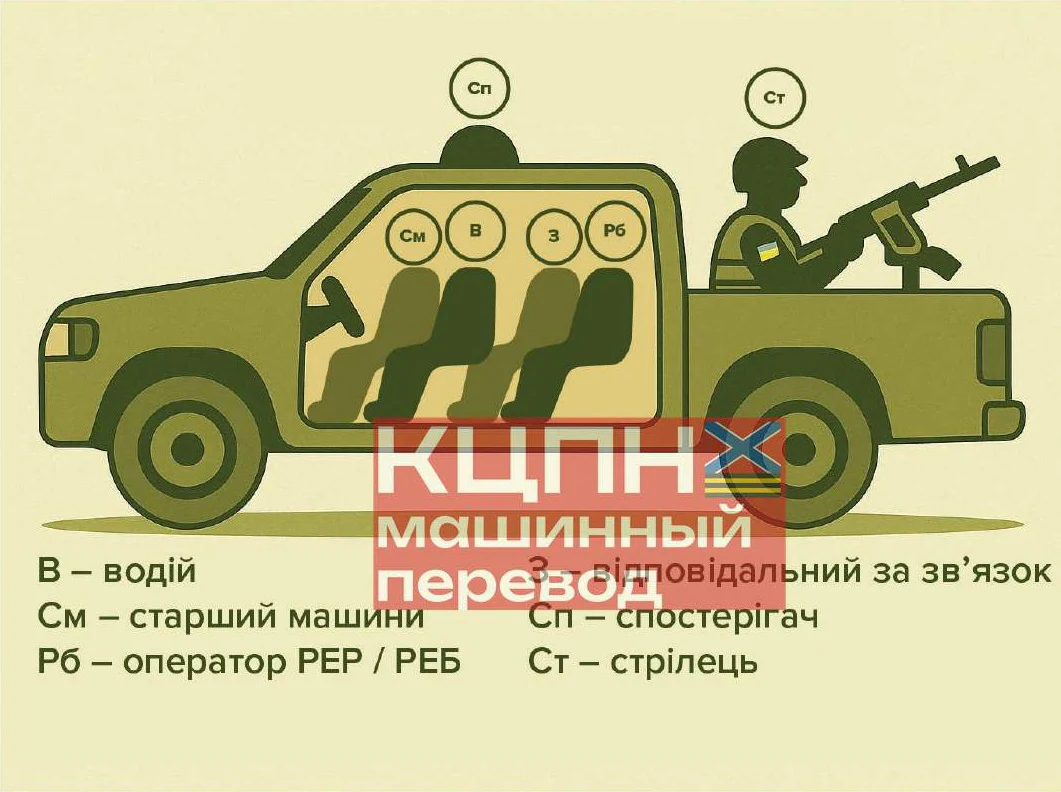
Example of role distribution among crew/passengers.
Ensures the radios are working and manages communications.
Monitors in case communication is lost.
Switches to a backup channel as needed.
Monitors reports on the air situation in groups.
Observes the sector assigned to him.
automatic - equipped with a 12 mm semi-automatic shotgun.
Always ready to open fire.
Carries out the vehicle commander's orders.
Destroys enemy drones with pellet load: pellet sizes 0 to 4.
Observes the sector assigned to him.
Responsible for the general first aid kit on the vehicle.
Completed tactical medicine courses.
with relevant experience, at minimum stopping arterial bleeding.
Not deterred by blood.
Observes the sector assigned to him.
For example, whoever sits closest to the fire extinguisher is responsible for using it and must be ready - additional roles can also be assigned
Activate it.
✓
Important! In a small team, one person can fill several roles, but this must be determined before departure.
Before departure, everyone in the vehicle must be familiarized with the action algorithms in case of a threatening situation. It must be clearly explained who does what, when, and how.
The vehicle commander briefs the crew and passengers on the following action algorithms.
1. How to signal a likely threat
The signal to the crew is given by the communications lead, the intelligence/EW operator, or anyone who received by radio, phone, scanner, or warning detector that enemy UAVs
Operating in the area where the vehicle is moving.
Example: “Attention! FPV in the area...”.
2. How the crew and passengers should respond when receiving an alert
Stop unnecessary talking.
Check that everyone has helmets and body armor.
Check personal first aid kits.
Increase alertness.
Focus on timely detection of a drone near the vehicle.
3. How to signal when a drone is identified nearby
The signal is given by the observer or whoever first sees the drone or hears its characteristic sound.
When detected, speak loudly, clearly, and without panic: “FPV above left!”, “Noise over the road!”, “See a drone at two o’clock!”
4. Sequence of actions for the crew and passengers
Immediately performs an evasive maneuver: leaves the route, sharply changes direction, and changes speed.
If possible, move behind cover: a wall, fence, tree line, or hill.
Makes the decision: move, stop, or evacuate.
Stay inside.
Check their personal protective equipment again.
Prepare to evacuate only on command.
✓
This may lead to death—forbidden! Do not put body parts out of windows, open doors without an order, or get out on your own initiative.
1. Procedure when the vehicle is hit: explosion, engine stop, fire
Makes the evacuation decision.
Gives the command: “Evacuate!”
Indicates the direction in which the force moves to shelter.
It is recommended to leave the vehicle from the side opposite the direction of the attack.
The first one out watches the sky and helps others get out.
If the door is jammed, evacuate through windows, hatches, or the trunk.
Leave the vehicle quickly but without panic: in haste it is easy to get injured.
Check that no one is left in the vehicle.
If possible, make sure no radio, weapon, or first aid kit was left in the cabin.
Leave the vehicle toward the shelter designated by the vehicle commander: a structure, line of trees, trench, and the like.
Spread out at least 15. meters apart
In open terrain, disperse and move to the nearest cover.
The last chance of a foot soldier in open terrain in the final stage of an FPV attack, at a distance of up to 50 meters, is to drop with the head
Toward the drone and slightly to the side.
-Do not try to outrun the drone; at the moment of attack its speed may reach 35 meters per second, more than 120 km/h
2. Actions if there are wounded in the crew
If someone on the team is injured, first aid is given after reaching a safe place.
The main priorities are stopping bleeding and securing breathing.
In severe bleeding, apply tourniquets, mark the time, and request medical assistance by radio.
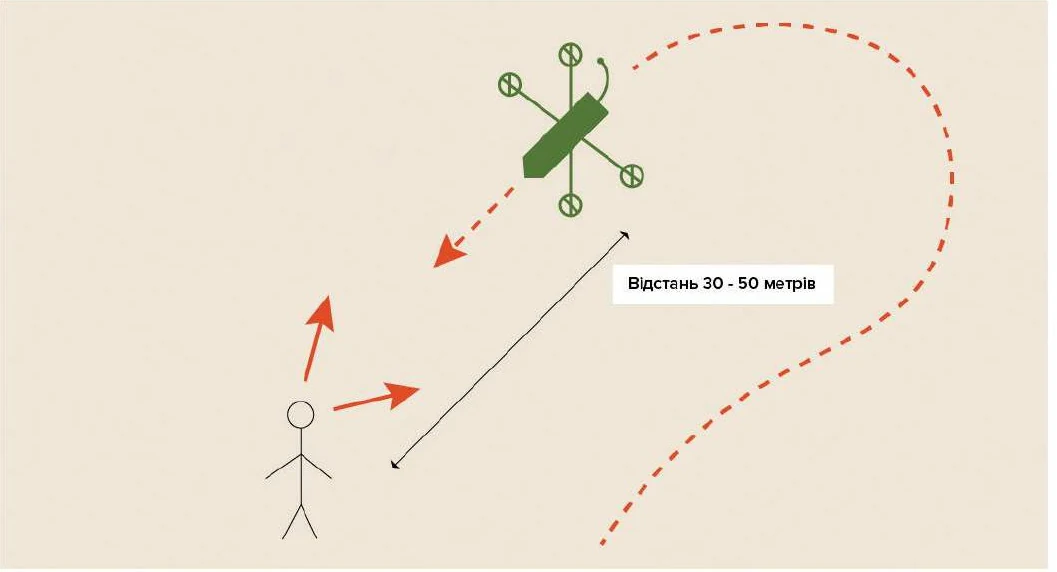
The chance of surviving an FPV attack in open terrain is to throw yourself to the ground at the last moment, with your head toward the drone and slightly to the side. The drone’s approach can also be identified
- By sound during an attack, the noise approaches quickly.
3. Actions in case of fire or smoke
If the flame is inside the vehicle, use a fire extinguisher.
In heavy smoke, leave the vehicle quickly without waiting for approval.
During evacuation, announce out loud that you are leaving the vehicle.
Under cover, conduct a headcount to make sure no one is left in the vehicle.
✓
Important! How to find shelter as quickly as possible? Do not remain in open terrain.
Every stop is a risk. Everyone must know the rules.
1. Do not leave the vehicle without authorization, except in case of impact or smoke.
Only by the vehicle commander's order - any exit from the vehicle.
2. After stopping, take observation positions. If the stop is prolonged:
The observer checks the surroundings.
All others remain in or near the vehicle under cover.
3. Road emergency. If a person outside the vehicle needs help, one person exits and the others provide cover and observe.
What is the movement order and spacing between the vehicles?
Who is the vehicle commander?
Who is the observer?
Who is the shooter?
Who is responsible for communications?
Which channel is used for communication? What is the backup comms?
Who is responsible for scanners/detectors and EW?
Who is the combat medic?
What to do when detected? FPV
What are the main landmarks, especially at changes in direction?
Which route segments are especially dangerous?
Where are the shelters along the route?
What are the main commands/signals?
When is it allowed to leave the vehicle?
Who is responsible for the fire extinguisher and tools?
✓
Important! The briefing is short, but critical. Repeat it every time before departure.
These rules apply to all vehicles moving in or near a combat zone. Following them significantly reduces the risk of being hit by an FPV drone or
Come under fire.
What does it mean?
An FPV drone is manually controlled by an operator in first-person view. If the vehicle moves straight and at a constant speed, it is very easy for the operator to aim at it and hit it.
Therefore, act so the operator cannot accurately predict where the vehicle will be in a second or two.
How to act?
Move in a “zigzag”:”
Change direction within the road: from lane to shoulder.
If possible, avoid moving in a straight line even in open terrain, for example in a field.
Example: 3 seconds right, 3 seconds left, then straight.
Change speed frequently:
-Do not drive all the time at 40 km/h
Vary speed: 50 → 25 → 45 → 30 km/h, with brief slowdowns. This disrupts the drone’s aim
Keep a power reserve to accelerate when needed.
Sometimes damaged roads are an advantage, because they force the vehicle to move chaotically and make it harder for the drone operator to predict it.
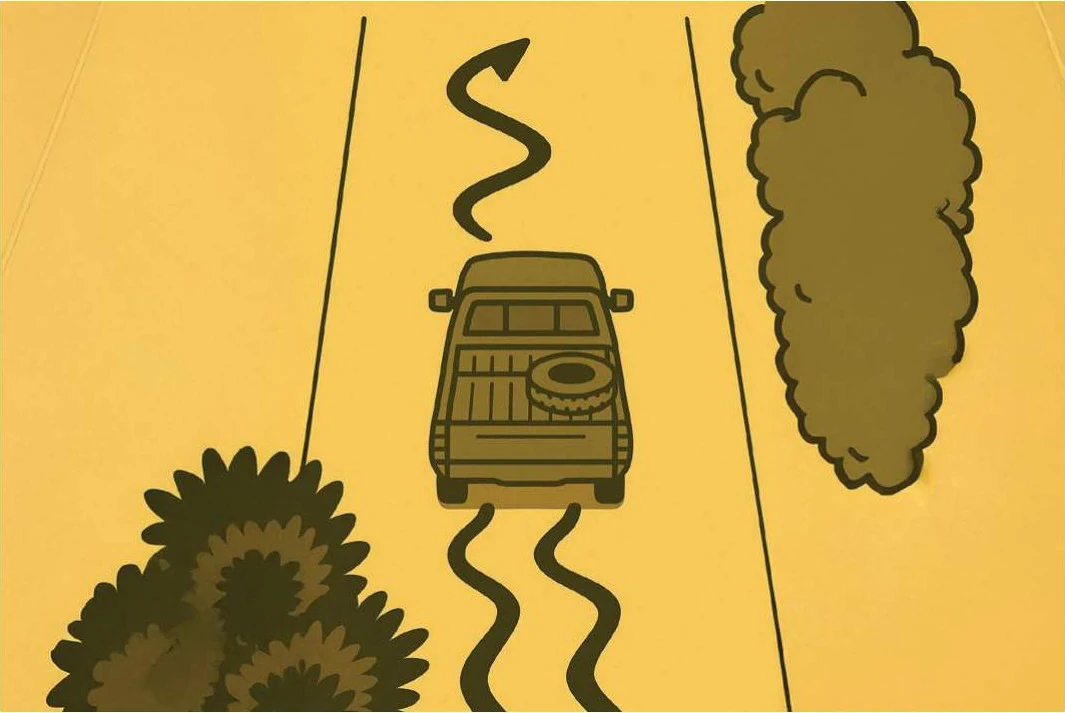
✓
Important! Drive so the enemy does not know where you will move next.
What does it mean?
An open section is a place where there is nothing that can cover or conceal the vehicle: fields, roads without vegetation, flat areas
Without trees or buildings.
Stopping there turns the vehicle into an easy target for a drone or enemy observation.
How to act?
Do not stop in open terrain under any circumstances, except:
A technical failure that completely blocks movement.
A direct order from higher headquarters over the radio.
In case of a stop in open terrain:
Keep it as short as possible.
The driver does not turn off the engine; everyone else is ready to evacuate.
Plan stops only under cover:
Behind a house, wall, hill, trees, embankment, and the like.
It is better to keep moving, even slowly, than to stop in an open stretch.
✓
Important! Do not stand under open sky—against FPV you are like a target on a shooting range.
What for?
You can detect an FPV before impact: hear the drone’s sound or see it in the air. Usually there are 3-10 seconds to react. FPV drone speed
A kamikaze drone flying directly at the target averages about 30 meters per second, about 110 km/h
How to act?
Position yourselves so you can see the sky and the road edges in your sector.
No headphones and no unnecessary conversations.
Lower a side window to hear better.
Constantly monitor all directions/areas in the assigned sector.
Everyone must watch carefully.
The vehicle commander assigns observation sectors among the crew/passengers: sky ahead, roadside for an FPV ambush ahead, right/left flanks, mirrors
rearward to the roadside and the sky behind, and the sky behind.
If there is only one passenger in the cabin, he can take the entire right/left side: sky, roadside, window, and rear-view mirror.
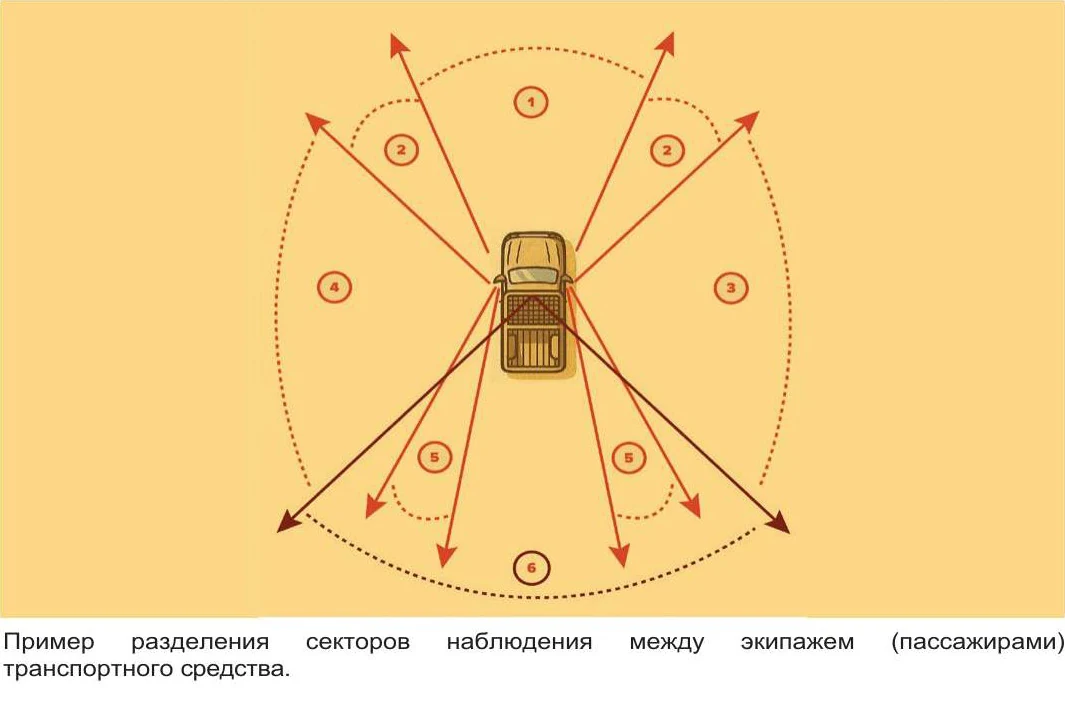
Example of dividing observation sectors among the vehicle crew/passengers.
Pay special attention to the front and rear: a large majority of FPV attacks come from behind or head-on.
If the vehicle is partially protected, the drone operator will likely aim at the unprotected areas. Watch those sectors carefully.
If traveling in the bed or fighting compartment, make sure they can observe the rear sector.
Everyone must listen carefully.
An FPV drone has a characteristic sound: a high-frequency buzz, as if a large insect is approaching.
Usually an FPV is heard before it appears in the field of view.
Pass information immediately.
If you heard or saw something, shout: “Drone on the right! ”, “Noise above”! - even if you are not sure.
✓
Important! A false alarm is better than a late report.
An FPV drone is a small and fast unmanned aerial vehicle, controlled by an operator via a real-time video camera. It is usually equipped
-With fragmentation or shaped-charge munition.
It strikes accurately and moves directly toward a vehicle or person. Reaction time is up to 10 seconds, so it is important to identify the threat as early as
possible.
The earliest signs—audio cues:
- The drone makes a distinctive high, piercing buzz.
Usually the sound is heard from a distance of 100-300 meters
Visual signs:
A small black or gray object moving very fast, fairly low above the ground, in a straight line or maneuvering; when maneuvering, the sound changes sharply.
Sometimes LED lights can be seen flashing on civilian FPV drones.
Reports from others:
If there are several vehicles/groups, someone may spot the drone first.
When receiving a call like “FPV on the left!”, “Contact above us!”, “Drone behind us!” even if you do not see it—react immediately,
yourselves.
✓
-Attention! Identify yourselves and use agreed signals on the radio: “This is Titan 1.. Tyson on the left”, and so on
If the drone- turn aside if there is room- the driver does not wait for approval and does not ask permission. He sharply changes direction and sharply changes speed.
From behind, he brakes or steers off the road to the side. The goal is to disrupt guidance and throw the drone operator off.
Remember the danger of mines on both sides of the road. Information about mined sections can be obtained from engineering and planning elements.
✓
Important! The most effective way to avoid being hit, if the drone has already locked on, is to hide behind cover.
Take cover. Anything suitable if it is:
blocks direct line of sight: wall, ravine, trees, hill.
Can stop or disrupt direct contact of the drone with the vehicle: branches, nets.
The worst decision is to stop on an open road, even if the drone “seems to have disappeared from view”.
In practice, this is one of the most effective countermeasures, and many crews have reached a high level of control with it.
Training and composure are required.
semi-automatic 12 mm shotgun is best suited
Hatsan and Mossberg rifles showed good results.
Use shot ammunition sizes 4, 3, 2, 1, 0.
If firing from the vehicle:
The driver goes straight and does not change course.
For safety, others can hold the shooter.

How to shoot down FPV video from—by shotgun and other weapons TV-.Army
Use a smoke grenade/smoke canister.
Activate EW measures at full power.
For your information: EW usually disrupts the radio signal between the drone and the operator, for example standard frequencies or 5.8, as well as navigation - GHz,
GPS if the drone is autonomous.
✓
Important! Not all FPV drones are affected by EW, but even a temporary signal loss can disrupt an attack.
When a kamikaze drone is visually detected, leave the road, preferably toward a tree line or buildings that partially limit the UAV’s maneuvering.
Stop, leave the vehicle as quickly as possible, and disperse to cover while maintaining the ability to see/hear each other.
✓
Survival - most important: act immediately! The crew has only a few seconds to decide. Whoever starts acting first survives.
Everything depends on the specific situation. The vehicle commander must decide and give the order. But there are several general recommendations.
Do not get out of the vehicle in open terrain where a person on foot is very easy to hit. Personnel in an open field are a high-priority target
more prominent and easier for the drone than the vehicle.
Plan the route so that open segments are as short as possible. Cross them as quickly as possible, alertly
Increased.
In an open field, the vehicle body is the only protection between you and an attack drone. A vehicle body “covered” with additional protection is much better
- Much more than a standard body. Better armor than that. Better still is armor covered with additional protection.
Example situation:
A convoy of three vehicles is moving on a dirt road. The weather is clear and the road is straight.
Suddenly a buzzing is heard overhead, an explosion ahead; the first vehicle is hit, smoke and debris.
The driver of the second vehicle, yours, brakes.
1. Stop immediately for a short time, but not in the middle of the road
The driver brakes; if safe, pulls over to the shoulder.
All passengers remain in the vehicle and do not jump out.
Stop duration does not exceed 10-.5 seconds
If you stay longer, you may be the next target; FPV drones often work in “pairs”.
The crew/passengers prepare for: a) continued movement, b) assistance, c) casualty evacuation.
2. Vehicle commander
Through a window, mirror, or hatch, assesses whether there is a second drone.
If he sees a drone, he tells the driver to maneuver and get out from under the attack.
Communications - if not, he orders: “Observer - assess the situation! Establish contact with command! ”
3. Observer
Through a window, slit, or open door, visually assesses whether the lead vehicle is burning and the extent of the damage, whether there are survivors, smoke, a repeated attack, or movement
Drone. He describes to the commander aloud:
”.“Fire, I do not see a drone, passengers are running out, I see four total, at least one wounded
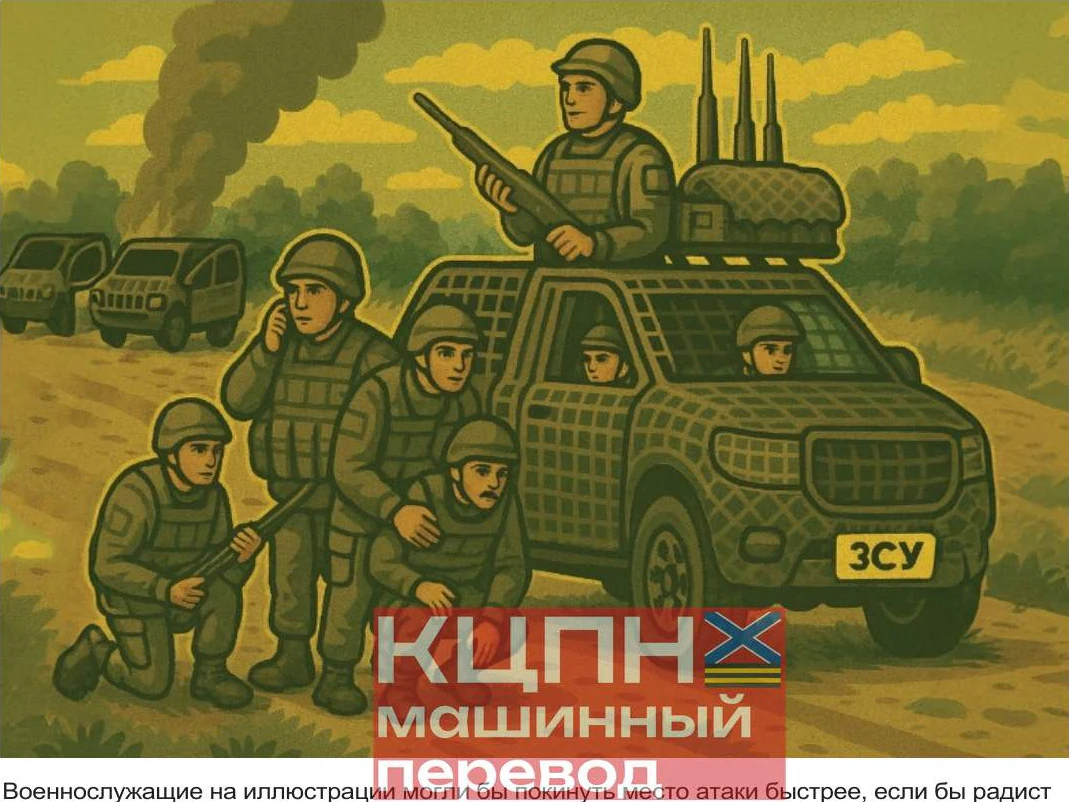
The soldiers in the illustration could have left the strike site faster if the radio operator had helped load the wounded person into the vehicle.
4. Radio comms - report to command
After establishing contact, the vehicle commander reports using agreed signals:
“Thunder-2 reports: Thunder.”1 hit, burning, visually four exiting, at least one wounded, I do not see drones, we are OK
-The message must be short, clear, and not occupy the air for more than 10 seconds
✓
Important! Stay alert: FPV drones sometimes strike the vehicle coming to help.
5.. If your vehicle is intact and not in cover, continue moving immediately toward cover
The vehicle commander makes a decision: “The vehicle is intact. Continue 100! meters, stop behind the hill.” The driver immediately starts moving.
- Seek cover immediately beyond the bend, behind a tree line, behind a hill—somewhere you can stop with a lower risk of being seen from above.
6. If it is necessary to assist the passengers of the damaged vehicle, but only under the following conditions:
If safe.
- If there is a second drone, do not stop and do not approach.
If there are no visible drones and the situation allows, the commander decides: “We stay, provide fire cover, two with me to evacuate the wounded.”
Action
What to do
Why it matters
Near the explosion
Stop for 5-10 seconds
Assess the situation
Observer
Look at the impact site through a window
Detect a second threat
Communications
Report to Raam/Titan
Inform others
Decision
Keep moving - if safe
Avoid a series of strikes
In evacuation
Only by the commander's order
Crew protection
✓
Important! Do not react impulsively and do not jump out without an order.
The FPV drone is not yet attacking, but has already been detected in the air by sound or sight. This is an advantage: you have a few seconds to save yourselves if
Act correctly and fast.
Example situation:
A vehicle is moving on a dirt road. The weather is clear. The observer in the back seat hears a sound from above: “Noise! FPV on the left at 100, 11
meters, flying low!”
1: . Immediate evasive action. The driver responds at once
Turns sharply aside: onto a dirt road, into a ditch, behind trees.
If the road allows, change lane or direction: left or right.
Brakes briefly and then accelerates sharply: this disrupts the drone operator’s aim.
Through a window, mirror, or hatch, assesses whether there is a second drone.
If he sees a drone, he instructs the driver to maneuver and get out from under the attack.
Communications - if not, he orders: “Observer - assess the situation! Report to command! ”
✓
Important! The driver does not ask permission; he acts immediately after the signal.
Gives the command: “Maneuver! EW on! Right behind the trees! Everyone stay low!”
✓
Remember: the average FPV speed at the moment of attack is 30 meters per second.
2. Move to natural or artificial cover
Drive behind it—anything—if there is a hill, structure, fence, or trees nearby.
The vehicle becomes partially invisible to the drone and the operator loses direct guidance.
If possible, stay close to a large structure, embankment, or under trees.
3. Activate EW, if available
Activate at full power.
You may cut the video signal or disable the autopilot.
4. Use firearms only on the vehicle commander's order
The shooter must:
Clearly see the drone.
Have time to aim.
Aim with lead.
Do not fire blindly.
-Shooting at an FPV without experience is difficult; therefore the shooter must be trained.
5. Report FPV passage to friendly forces, to command, or to the duty operations officer
Say who you are, where you saw the drone, where it flew, and where you are moving or standing.
The report is made by the communications lead.
-If reporting by radio, use agreed signals. For example: “Attention everyone, this is Titan 1! Tyson toward point Charlie! We are at point
Tango.”
✓
Important! If the drone has already switched to a direct attack on you, it is better to save yourselves than to open fire.
6. Listen and prepare for evacuation
If you have already stopped near cover:
The driver turns off the engine and lowers all side windows.
The observer watches the sky.
Open the doors slightly so they do not jam in a possible strike.
Listen for a drone.
Assess the situation outside: where to run.
Check protective gear and weapons.
Prepare weapons and other equipment; get ready to leave the vehicle if required.
7. If the drone continues to attack - evacuate
The vehicle must be abandoned if:
The evasive maneuver failed.
The drone is “hovering” or tracking you.
You cannot hide.
✓
Important! If you managed to see the drone, that is a chance to survive. Do not panic. Do not stay silent. Act.
8. Actions during evacuation
Above all—choose the nearest cover: forest, ditch, pit, behind a fence, trees, bushes.
The driver brakes. The vehicle commander orders: “Out, left, follow me, to cover!”
The passengers open doors, preferably on the safer side opposite the detected drone, and get out as quickly as possible, bent over, running
To shelter.
Spread out, but do not spread out too far. Do not run into open terrain.
Close the vehicle’s doors/openings behind you.
Everyone must have a helmet, vest, and first aid kit, and everyone must be ready to drop, crawl, and hide.
After dispersing, use personal protection: hide, if possible, behind trees, structures, and dense bushes.
In open terrain, move quickly, and on the final run of an FPV attack drop sharply with your head toward the drone and slightly to the side.
Last resort: try to knock down or intercept the drone with improvised means such as branches, dirt, or a shovel.
If the drone is controlled via fiber optic, it is hard to jam but easy to sever the cable by bending/breaking it.
✓
Important! If you managed to see the drone, that is a chance to survive. Do not panic. Do not stay silent. Act.
Action
What to do
Why it matters
Drone detected
Evasion, change of direction, and change of speed
does not give the enemy a chance to hit the vehicle
Move to shelter
Look for a more protected place and move into it
A quick additional protection from impact must be found
Activating EW
Activate EW at full power
May affect the operation of the enemy drone
Use of fire
Shoot at the enemy drone
creates an opportunity to destroy the means of attack
Evacuation
Leave the vehicle when necessary
Makes it possible to save personnel after a hit
An FPV drone was detected in advance by sound or sight, but is now not visible and no buzzing is heard. It may be hiding behind trees or buildings, circling around and attacking from the side
another. The worst assumption is that the danger has passed. FPV drones sometimes come from the flanks or attack with a delay to surprise the crew.
Example situation:
A vehicle is moving along a tree line. The observer reports: “FPV at five o’clock, 150 meters! ” The driver maneuvers and visually searches for nearby cover to limit the
The attacking drone maneuvers. After a few seconds the observer says: “The drone disappeared. Not visible. Quiet.”
1. Do not relax - the drone is likely continuing the attack.
FPV is not a rocket and not a shell. The operator can:
Pass you from behind or from the side.
Climb higher and then deliver an unexpected strike.
✓
Important! If you managed to see the drone, that is a chance to survive. Do not panic. Do not stay silent. Act.
2. Continue acting as if you are under threat for at least another 1-2 minutes.
Why 1-2 minutes? This is roughly the time in which the operator may retarget, bypass, or wait for a convenient moment.
Continue to maneuver:
Change course sharply every 5-10 seconds
If possible, leave the route.
Move into covered terrain: bushes, folds in the ground, between trees.
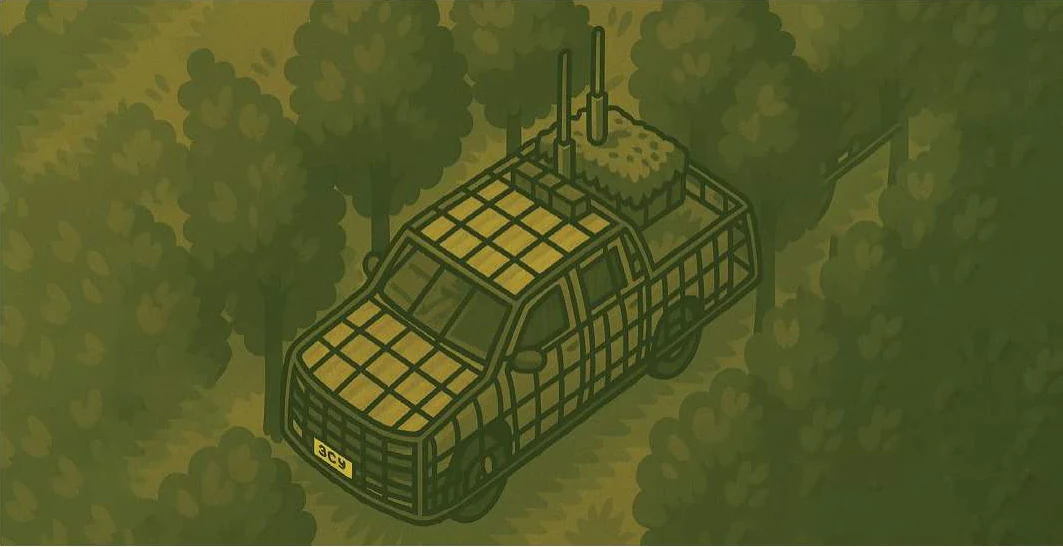
Hide among trees - one of the simplest shelter options.
The observer must act with double alertness:
Divide the field of view into sectors: forward, left, right, back, up.
Continuously scan the sky and the flanks.
Be ready to report even if the drone appears behind the vehicle at short range.
3. Stop - only as a last resort. If stopping is mandatory:
Do this only under cover: a structure, forest, hill.
Do not turn off the engine so you can leave immediately.
4. If after 2-3 minutes the threat is not confirmed, continue moving, but
Maneuver from time to time.
You have no right to relax.
Be prepared to reacquire the drone.
✓
Important! Better 3 minutes of tension than one second under fire.
Sign
What to do
If the FPV disappears, assume it only changed course
Not visible/not audible
This is maximum danger—this is not safety
2-3 minutes without a threat only then can you relax a little
Passengers are not the driver, the commander, or the shooter. They are the people in the vehicle: fighters, medics, volunteers, etc. They do not control the vehicle and wait for orders
The vehicle commander.
When an FPV drone is detected or there is suspicion of an attack, the behavior of the passengers can save lives or create an additional threat.
Example situation:
There are 5 people in the pickup: one driver, one commander in the front seat, and 3 passengers in the rear seat inside the cabin, not in the bed
The observer says: “FPV above us! 12 o’clock, approaching!” The driver begins to maneuver
1.. Do not panic, do not shout, and do not move without permission
Panic equals death. The first impulse may be to jump out of the vehicle, but that is the worst thing.
What to do:
Quietly and quickly stabilize your body position.
Sit below the window line.
Lower your head.
Stay close to the floor if there is room.
Do not raise hands, head, or bags.
Why it matters:
The drone may choose a moving target.
If a head or shoulders are visible through a window, the operator aims exactly there.
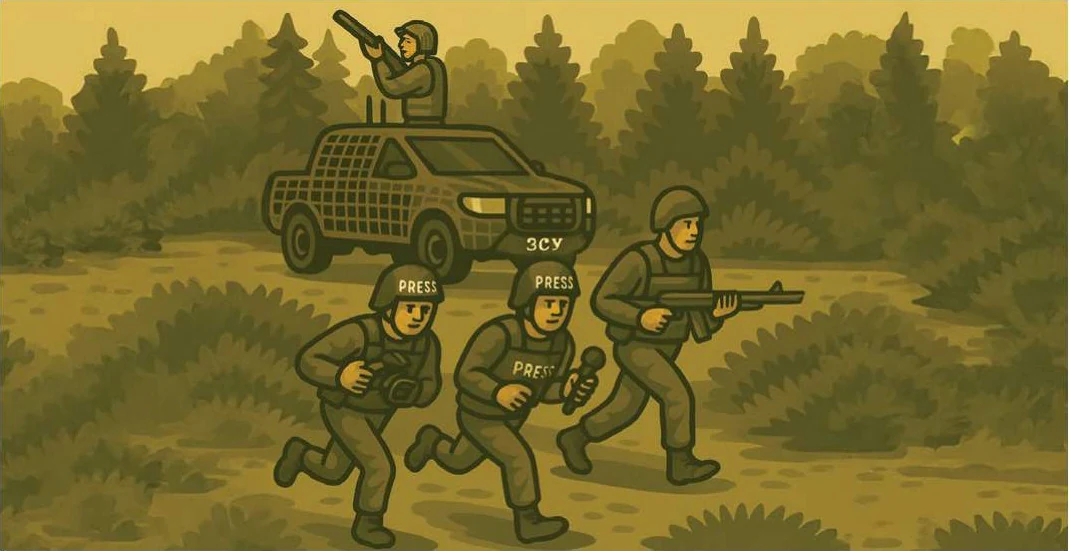
Make sure the passengers disperse after getting out of the vehicle.
2.. Prepare for evacuation, but do not exit on your own initiative
Each passenger checks that:
Helmet and body armor worn and secured.
First aid kit in a pocket or at hand, not in a backpack.
Weapon/backpack will not interfere with evacuation.
The door/hatch is unlocked, but not open.
Be ready for a command such as: “Evacuate! Exit left/right, to the tree line,” and the like. Even a few seconds of preparation for evacuation can save
lives.
3. Carry out only the orders of the senior team member or their deputy.
Passenger actions on the command “Out!”, for example: “Left, behind the wheel, to the trench!”
Exit quickly, one after another, without pushing, through the designated side.
Keep the weapon/bag on you but do not let it hinder movement.
Run/crawl along the designated route; do not look back.
Take a prone position or get behind cover.
✓
Important! The vehicle commander is the only one who gives the order to exit.
4. In case of an attack, act automatically but according to the plan.
If the drone attacks, there will be an explosion. For example, if the vehicle windows shatter, there is smoke, and the vehicle slows down, then the passenger:
If he is conscious, he exits as quickly as possible in the designated direction, away from the vehicle and to cover, without grouping with others.
If wounded, report the injury and its location aloud, for example: “left leg.”
You are not commanders. The main thing is to listen and survive.
Your task is not to create chaos.
Remember! Even the strongest fighter loses 0.5-1 seconds in a moment of panic
What to do
Why
Sit below the window
Makes it harder to direct the drone
Be ready to exit
2-3 critical seconds
Do not act independently
Coordination saves lives
Exit only on command
Prevents chaos and multiple casualties
Save yourself immediately - if an explosion occurred
A second drone may hit the vehicle
5. After reaching the designated point
At the start of the trip, agree with the passengers on the order of dismount and unloading upon arrival.
First, one person exits, preferably with a shotgun, checks the situation for drones and gives the signal to dismount. There have been cases where an FPV followed a vehicle
Protected so as to hit everyone through the open troop compartment doors.
✓
Important! After dismount/evacuation, do not gather near the vehicle under any circumstances.
In this case the driver carries a heavy load, especially if not moving in a convoy. The risk is also greater.
As a rule, this scenario should be avoided, but sometimes there is no choice. The main thing when working alone is to listen to the air and the sky.
Example situation:
A jeep with a single driver is moving on a dirt road near a line of trees between the villages of Ivanivka and Andriivka. A message is heard on the radio: “Attention! Pssss...”,“
- and the signal is lost. The phone sounds an alert from an air situation monitoring group. The driver reads the new message: “Andriivka FPV! ! ! ”
1: . It is advisable to move into cover, in this case a tree line, and clarify the situation
Turn off the engine to hear better.
Lower the windows for the same reason.
Open the doors slightly so they do not jam in an unexpected strike.
2: . If nothing is heard
Take the radio, phone, and weapon from the vehicle.
Check vest, helmet, and first aid kit.
Move farther from the vehicle, deeper into the tree line.
Keep watching the sky.
3. If a drone is heard:
Leave the vehicle quickly, if you are not in open terrain.
If you are already outside the vehicle, do not expose yourselves by moving.
-Report the FPV direction of movement immediately. For example: “FPV toward Ivanivka, along [code name of tree line/route/point]”.
If reporting by radio, use agreed signals: “Attention, this is Bars, Tyson toward Brovary, along Hron”.
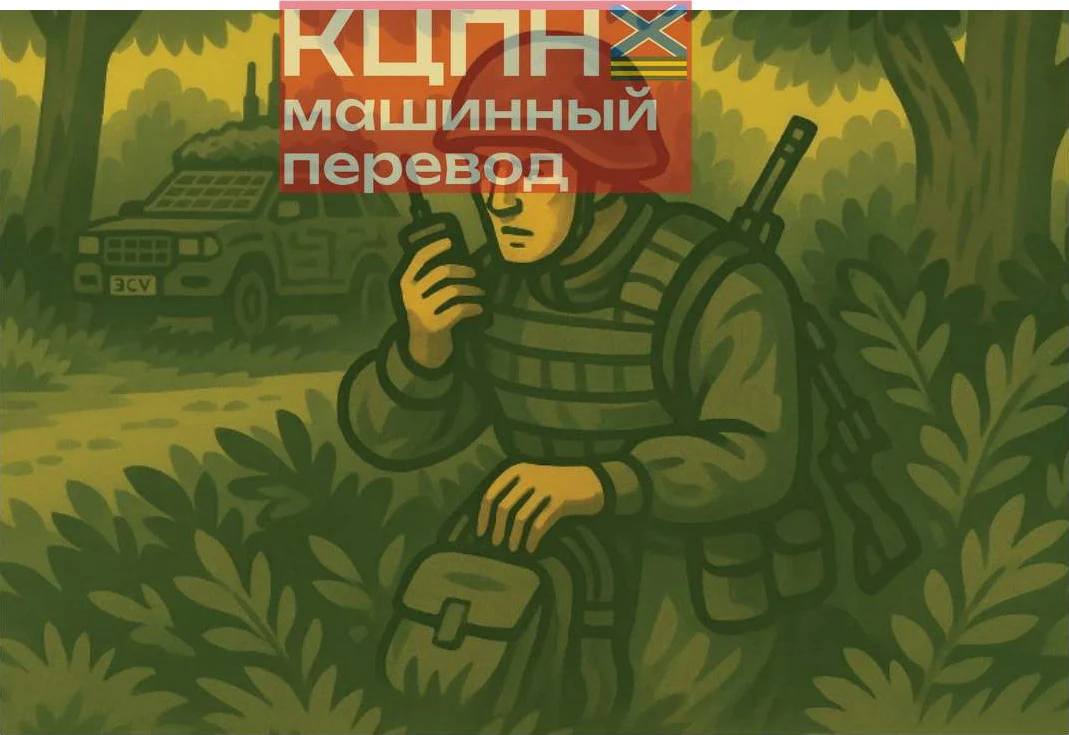
Before turning off the engine, do not forget to turn off the EW; otherwise there is a risk of draining the battery.
4: . If the drone did not attack the vehicle
Wait 5-10 minutes.
If a drone explosion is heard in the distance, report it by radio or in the group.
Keep moving.
5. If the drone attacked the vehicle, report it, state the attack location and your status.
If the vehicle is still moving, leave the attack site as quickly as possible.
If the vehicle does not move:
Take cover in the tree line and wait for the situation to develop.
Report the circumstances and location of the attack; it is quite possible the enemy will try to finish destroying the vehicle.
6. If there is no repeated attack for 30 minutes
If possible, try to restore the vehicle to working condition yourselves.
Take important items/documents from the vehicle.
Wait for passing transport and leave the strike site.
Call for evacuation.
✓
Important! Listen to the air and the sky. Turn off music, open windows, and raise radio and phone volume to maximum.
Threat or disorientation- if a vehicle is forced to stop unexpectedly for any reason- due to a technical fault, an obstacle on the road, do not behave as if you are in the rear area.
is a moment of vulnerability.
Example situation:
An armored bus with a crew of 5 is traveling on a rural road. During a fast dash across an open field section, the vehicle commander notices a sudden change in the sound
The tire is worn in the track. The driver feels the vehicle pulling to the right and stops. No one is behind. No drones are visible. Communications are unstable.
1.. Do not exit the vehicle immediately. Everyone stays inside
An open place is an ideal target. Even in a technical malfunction, if there is no smoke, fire, or shooting, stay in the compartment. The vehicle is the only protection against a drone attack
unpredictable, and it may track from a distance or wait in a nearby ground ambush.
2. The crew commander makes a decision:
If the situation is unclear, he instructs the observer to check.
- For example, to inflate a punctured tire or change a wheel—if there is an option to keep moving to minimal cover for repair, it is better to do so.
If it is clear there is no way to get out, for example a wheel has come off, exit only according to the rules of cover.
3. Shooter
Observes the sky.
Brings the shotgun to ready status: safety off, round chambered.
Remains ready at all times to open fire.
4. The observer exits first, only with the commander's approval. He is equipped with a helmet, vest, aid kit, and ready weapon, exits slowly, and scans the area: around
The vehicle, flanks, rear, and sky.
He listens to the surrounding sounds for at least 10-15 seconds. If all is clear, he signals or says aloud: “Clear! One out!”
5. Establish an observation perimeter.
Create perimeter security around the target vehicle.
Direction
Who is responsible
How to act
Forward
Observer or shooter
Covers the most dangerous direction, for example the front
Right flank
Right-side passenger
Observes the right sector
Left flank
Left-side passenger
Observes the left sector
Rear
Whoever exited last
checks the area behind the vehicle
Sky
Everyone in turn
Scan every 10 seconds
The main thing is attention. If you have binoculars, use them in the direction that gives the longest field of view.
6. Technical stop/fault clearance - repair actions
If the malfunction is not serious and the area is clear with no signs of danger:
Two people work on the repair; the others remain on watch.
Do not move away from the vehicle without permission.
Report to command; do not forget agreed signals.
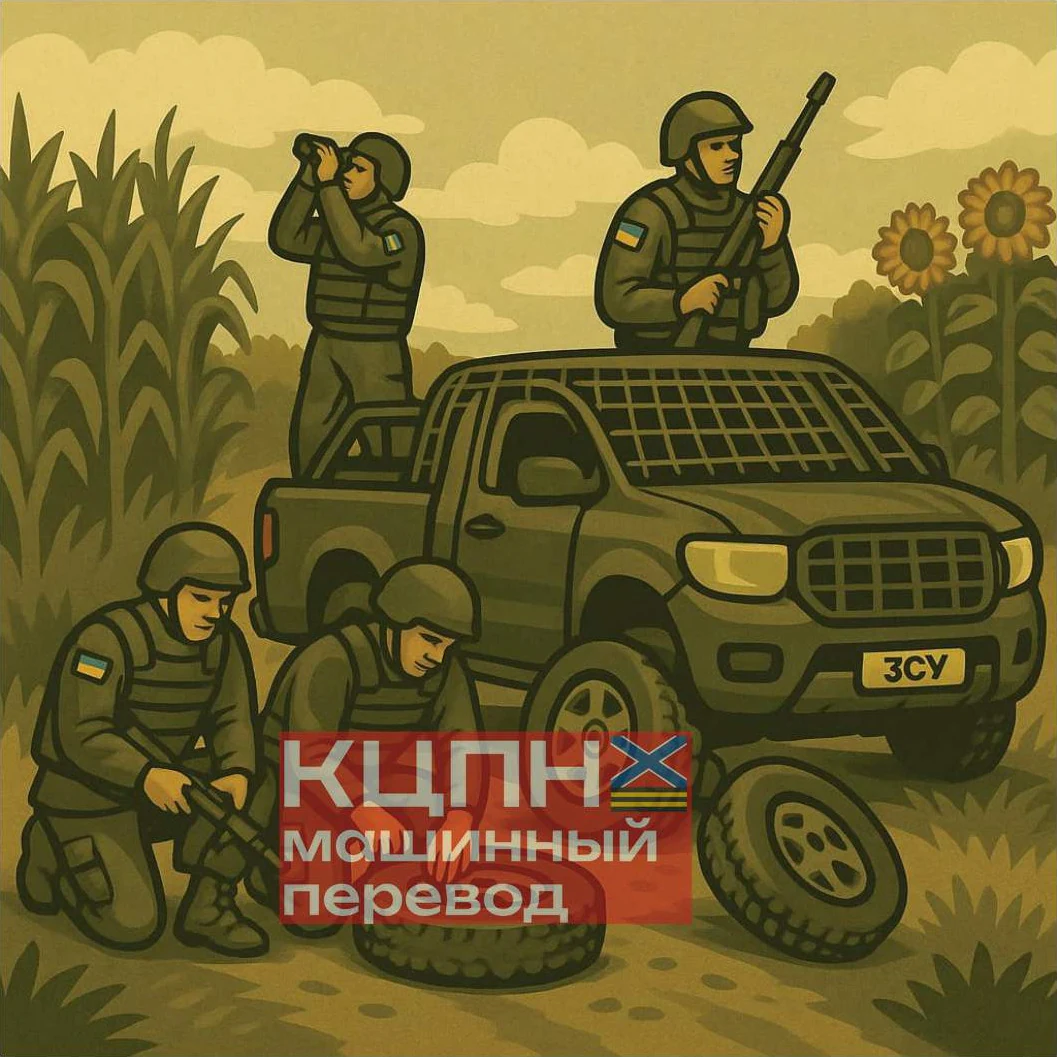
During a forced stop, no one relaxes. Everyone performs their assigned role.
6. If the delay lasts more than 5 minutes, change position.
If the problem is not resolved, proceed to evacuate the team to the nearest cover or transfer to another vehicle, if possible.
✓
Important! A stop is not rest. No “I’ll get out and look” without the vehicle commander’s approval.
Stage
What to do
1 everyone stays in the vehicle and waits
2 the commander decides: wait/check
3 exit is permitted only for the observer
4 an observation perimeter is established
5 solve the problem while the others provide cover
6 change position - if the stop is prolonged
If you need to stop, do so in protected places: anti-drone tunnels, dense tree lines, under structures, bridges, or power lines.
- Do not stop near other vehicles, especially if there are many of them; a cluster draws attention.
An FPV strike was carried out against the vehicle, but the vehicle remained mobile and no crew member was seriously injured.
Usually in this situation:
People are under stress.
They do not fully understand the scale of the threat.
They may act chaotically.
Example situation:
An off-road vehicle is moving on a dirt road. An FPV sound is heard; a short maneuver; an explosion on the right, a hit to the cargo bed, dirt spray, the rear window breaks. The vehicle did not stop. People
Panicked; dust and noise inside. The engine is running, the vehicle is controllable. No one is injured.
1. Keep moving - do not stop.
FPV drones may operate in pairs. The first attack is a distraction and the second is the aimed strike.
Your actions: the driver continues moving for at least another 300-500 meters, preferably maneuvering, and chooses a direction toward cover or at least terrain folds. This prevents an attack
returns and time is gained for situation assessment.
2. Assess the crew's condition while moving.
The team commander gives the command: “Check everyone! Hands, legs, any blood?”
Why it matters: A person may not notice shock or a wound due to stress; a quick assessment saves critical seconds.
3. Technical assessment while moving.
The driver listens whether the engine is running without interruption and checks whether the vehicle responds to steering, whether it pulls to one side, whether warning lights come on, and whether there is smoke/steam
Under the hood.
- If the vehicle is controllable, do not stop.
4. After reaching cover - a short stop for assessment.
Stop only under cover: an embankment, concrete wall, line of trees, buildings, and the like. After stopping, the commander orders: “Damage assessment, vehicle check,”
Comms in the air! ”
The observer exits first and checks for external damage, whether the drone or its parts remained, and signs of further danger.
The driver turns off the engine only if safe, and checks the windows, lights, trunk, wheel wells, and wheels.
The communications lead contacts command.
The other crew members check equipment, tourniquets, and first-aid kits, and recheck their own condition and the condition of the person next to them.
5. Report to command.
-By radio, with agreed signals, or through another channel: “Thunder 2. FPV attack, near hit, vehicle moving, no casualties. Continuing. Location/point designation
Zion.”
Why it matters: Other vehicles may move along the same route and come under a repeat strike.
6. Continue moving or switch to evacuation, depending on the situation.
If the vehicle is fit, movement continues.
If the doors are broken, assign a passenger to hold them.
If there are light injuries, treatment is given on the way.
If there is a risk of continued attack, change route and move to a safe place/cover.
✓
Important! An attack is not the end of the mission; only after checking the people and the vehicle does the next task begin. Panic after an attack
is a greater danger than the explosion itself.
Stage
What to do
1 continue moving; do not stop
2 Check people's condition with questions
3 check the vehicle while moving
4 stop in cover and check
5 report to command
6 continue moving or switch to evacuation
If enemy FPV drones cannot operate, usually due to weather conditions, the enemy may keep roads under artillery fire.
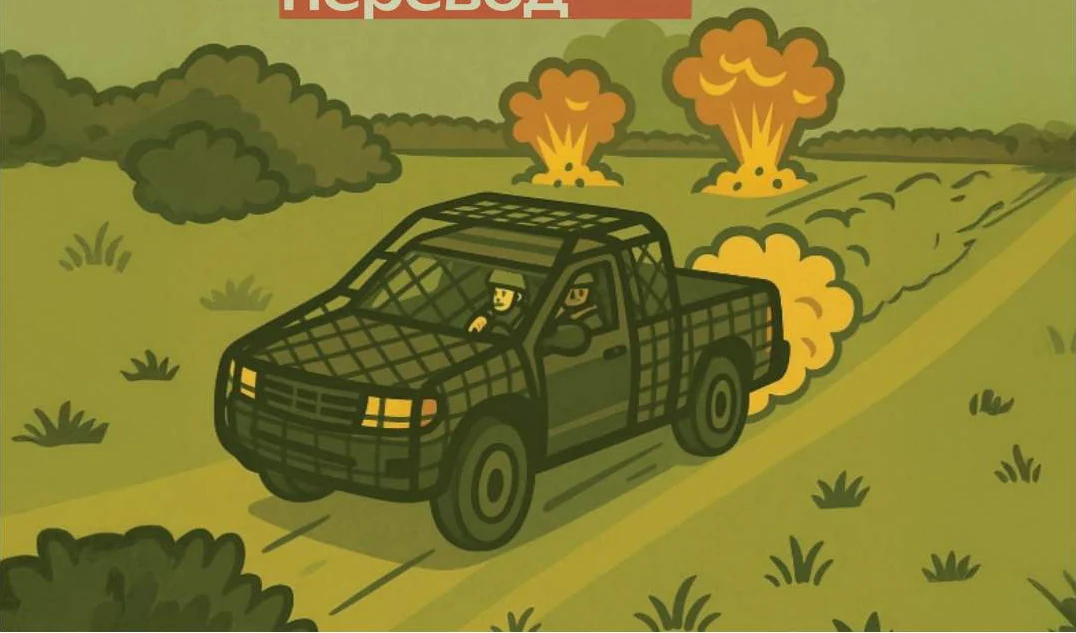
Sharp changes in speed also help both during an FPV attack and in the event of artillery fire.
If you come under artillery fire, it means an observer is working. Therefore it is better to choose a stopping cover with a large area so you can “disappear” within it
the terrain from observation: forest, wide tree line, large buildings.
This is a situation in which a vehicle was attacked by FPV or another type of strike and sustained significant damage:
Lost mobility.
Caught fire.
One or more wheels were destroyed.
Passengers were hit.
Communications failed.
In these conditions, every second is worth gold.
Example situation:
A convoy of three vehicles is moving on a dirt road. An FPV drone hits the second vehicle. Explosion, smoke, engine stalls, rear wheel destroyed, fragments, glass and dust,
One passenger was injured.
1.. Do not stop immediately at the attack site
If you are still moving, try to get away; there is a risk that another drone will come after the attack drone.
If the vehicle cannot move, the driver turns off the engine and applies the brake, and the commander manages the evacuation.
2. Main priority: preserve the crew's lives.
The team commander gives the evacuation order and indicates the direction of movement. All passengers check equipment: helmet, vest, aid kit; take weapons and documents if
Enough.
Preferably from the side opposite the explosion - exit one by one, .
If someone is injured, check vital signs: “Can you hear? Is there bleeding? Breathing? ”
In severe bleeding, apply a tourniquet before leaving the vehicle or already under cover.
3. Evacuation: move to cover.
Move to shelter on command, in an organized manner and not as a crowd.
If a casualty must be evacuated: lightly wounded move independently. Two drag a seriously wounded casualty, one provides cover.
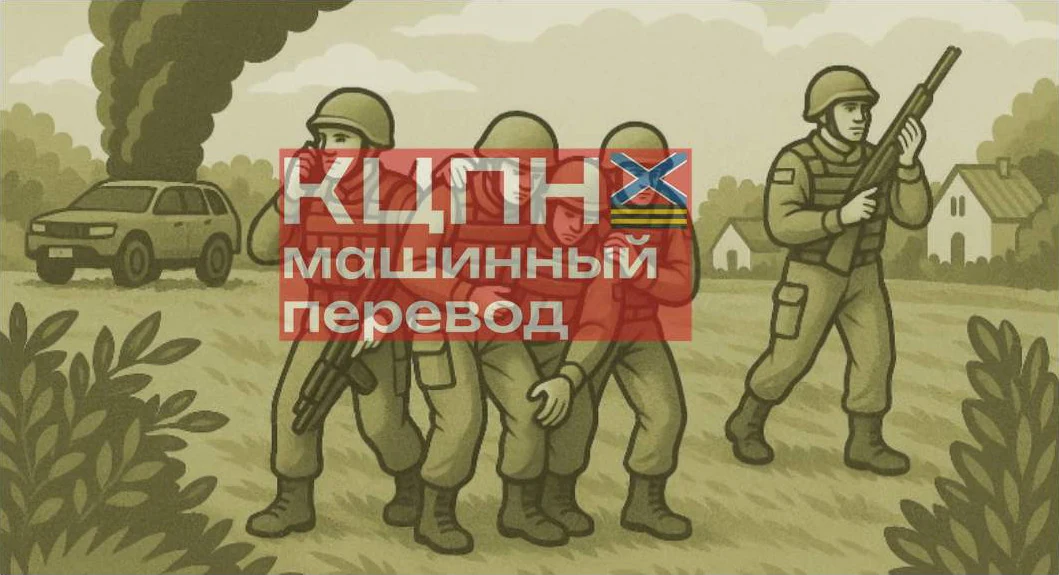
The fighters in the illustration are moving too close together. The two on the ends should cover the group with the wounded person from the front and rear, at a distance of 20-30 meters each.
4.. Check if everyone is alive and who is wounded
-After reaching cover, the commander checks the roster by name or by voice: “Thunder 2”?, five people, all alive? Plus/minus
Set:
Who is injured and how badly.
Who is missing: fell from the vehicle, not responding.
Who has communications: radio or phone working.
5. Report to command.
Report by radio using agreed signals: who we are, what happened, whether the vehicle is mobile, whether there are wounded including number and condition, where they were evacuated, by call sign
route, and whether evacuation/cover is required.
If communication is lost, pass the message another way: by phone, through a passing vehicle, through your drone, or by runner.
6. Leave the disabled vehicle or stay near it - the vehicle commander decides.
If there is no repeat threat, it is possible to:
Return to the equipment.
Look for better shelter or improve the existing one.
Wait for evacuation.
It is mandatory to document the damage to the vehicle with photos. This will be required later; see part 5: actions after the movement is completed
If there is a risk of a repeat attack:
Leave the vehicle.
Move away and look for better shelter.
Crush or burn the vehicle, if there is an order and the ability to do so.
Move farther away if needed, and look for better shelter.
✓
Important! A vehicle is metal. Life is what matters most.
Stage
What to do
1 move away from the blast site- if possible
2 Do not panic; assess the condition of the vehicle and people
3 evacuate by order, with cover
4 group check: by names or by voice
5 report to command
6 decision: abandon/cover/destroy the vehicle
7 wait for evacuation or leave independently
Every situation is unique. Every person’s experience is unique. Sometimes you will act according to your understanding of the situation and it will work. Be sure
Share your experience with others. It may become the next part of the instruction.
If you are almost home and an enemy reconnaissance drone is hovering, do not drive directly to base, because it will become a high-priority target. Wait
to the “clear” signal.
If so, the vehicle has reached the route endpoint, which is:
Is in a possible danger area: forward area, rear base, evacuation point, field hospital, observation post, etc.
or the stop was forced due to an attack, malfunction, or sudden threat.
Regardless of the circumstances, you must not “relax” immediately. A clear assessment algorithm must be carried out: check the team, check the vehicle, and document threat signs so as not to repeat
mistakes in the future.
1.. Check personnel status: crew and passengers
Why it matters:
Stress and adrenaline may hide injuries.
Even minor damage may worsen if left untreated.
How to act:
The vehicle commander orders: “Personnel check: everyone checks themselves and the neighbor to the left!”
Everyone removes or loosens body armor.
What to check:
Whether there is blood on the clothes.
Whether everything is intact: hands, legs, torso, head.
Whether there is pain on pressure or movement.
Check the person next to you for injuries they may not see.
Report: “Clear”, “Cut on left forearm, medic”, “Leg hurts, no blood”.
The commander records the number of people and their condition: fit for combat; lightly wounded; need evacuation; in serious condition.
2. Check the technical condition of the vehicle.
Why it matters:
Even if the vehicle got there, it may not be fit for the return trip.
How to act:
The driver or designated mechanic conducts a visual inspection around the vehicle:
Wheel condition.
Under the vehicle: are there fuel/fluid leaks.
Rear section: whether the body is damaged.
Hatches/doors: whether they close.
Check oil level, coolant, overheating, or a burnt smell.
He reports to the commander: “The vehicle is mobile. One wheel is damaged and needs replacement. There is a crack in the windshield, but it is holding. The rear window is missing. Brake lights
and the rear marker lights are not working. Steering is normal.”
-Also check the condition of the assemblies, vehicle units, tires, electrical system, and fastening mechanisms if using trailers or semi-trailers.
If faults are found, take measures to fix them on site using the drivers/crew.
If it cannot be repaired on site, arrange to involve specialists from your technical support units or forces and means from the senior commander.
After returning to the permanent location, it is mandatory to refuel the vehicle, preferably to a full tank, complete travel documents, and prepare the vehicle for further use.
3. Document signs of fire or an FPV drone strike, if there was one.
Why it matters:
Documentation helps understand the type of threat, its direction, and the enemy's likely period of activity.
The collected information can be passed to another unit moving along the same route.
If the situation is critical, request reinforcement or evacuation: “Requesting medical evacuation for lightly wounded; provide EW cover for the return route.”
4. Report to command.
Report personally, clearly, briefly, and to the point. Message structure:
Call sign, place, time:
“Thunder-2.”12: 35.. we reached point Bravo
Route and events:
“Movement through point 15 was clear. Near point 9: FPV drone attack, near hit.”
Losses/damage:
“One lightly wounded, left arm; vehicle mobile; rear side hit.”
Threat assessment/recommendation:
“In section 17-18, FPV activity is high; attention/EW escort is required for the next groups.”
Summary:
“The mission is complete, the team is intact.”
Action plans and the like - over communications, sensitive information - coordinates, routes, number of people, is reported only using agreed signals.
5. Pass information to the following teams. If other groups are moving on the route, pass them the information through command or personally. Even a “small incident” is
a chance to save others. Without information,
Command does not see the full picture, and this endangers others.
✓
Important! Even if “everything is fine,” reporting is mandatory.
it is as if it never happened—it is mandatory to document what happened, because if it was not documented and not reported,
Time of the incident, exact or estimated.
Location: landmark, coordinates, photo with GPS.
Who was present.
What exactly happened: explosion, sound, gunfire, accident.
Results: injured, vehicle damage, stop, hit.
✓
From the system's perspective, it did not happen - mandatory! Prepare a written or voice description of the situation. If it was not documented and not reported.
Damage to the vehicle: holes, dents, broken glass, leaks, broken components, torn-off parts.
Environment: place of the explosion/attack, drone remains, munition remains, shell casings, landmarks such as a tree, pole, terrain and landscape features near the place
The strike.
Body of a casualty, if any: carefully, with permission, without the face.
Keep the event description/evidence and pass them to the responsible person. All photos, records, and remains, if collected, are handed over to:
Company/battalion commander.
Intelligence or UAV lead.
Whoever manages the incident database.
✓
Important! Never publish information collected on social media. By doing so, you are doing the enemy’s intelligence work.
7.. Conduct an after-action review after completing the mission
An incident without analysis is lost experience. If any incident occurred during the mission, especially one related to an attack or threat, after returning to base
Must be done:
Information gathering.
Documentation of visual and audio traces.
Description of the situation.
Why do this?
To analyze enemy tactics.
To prepare reports and summaries.
To provide evidence in case of an inquiry or inspection.
So as not to repeat mistakes in the future.
Do not wait for the evening or a meeting. Gather the team within 15 minutes of arrival, while everyone is still “on adrenaline” and remembers details. Appoint a facilitator, not
necessarily the vehicle commander, who lets everyone speak and writes down the key points of the analysis.
Analysis of the actions taken is done not to look for “the guilty,” but to perform future missions better.
What was done right? What saved lives?
What did not work? What can be done better?
How to prepare better next time?
What needs to be changed and how: route, protection, tactics, etc.?
Do not be afraid to speak honestly, and under no circumstances punish anyone who speaks honestly. Analysis is combat learning that saves others. The mistake
Yours today is someone else's injury tomorrow. And your conclusion in time is someone else's chance to survive.
✓
Important! After-action analysis is not for punishment, but for learning.
In modern combat conditions, when the enemy actively uses FPV drones to attack personnel and vehicles, survivability
the crew depends not only on equipment, but first and foremost on preparation, discipline, and the ability to act at a critical moment.
and at a critical moment we do not act at the peak of our ability, but at the peak of our preparation and experience.
Every action described in this memo is the result of combat experience, analysis of real incidents, and mistakes that unfortunately
Sometimes cost lives. This is not formality or theory, but practical algorithms that make it possible to:
Detect a threat in time.
Avoid being hit.
Survive after an attack.
Save your comrades.
Draw the right conclusions and improve preparation for next time.
Vehicles can be replaced. Human life cannot. Therefore, the team’s main task is to remember that every departure is a danger
is possible, and only a timely response saves lives.
and the risk—act according to the instructions, practice the algorithms, analyze the situation, maintain order, and then returning will become the rule,
will decrease.
Stay alive. Return. Keep fighting.